
During the pandemic, people spent far more time at home than they were accustomed to. Often the entire household was together around the clock—navigating life with older kids alongside toddlers or babies. It was an exceptionally demanding chapter for all of us. We could either view it as an exhausting drag or turn it into an opportunity for personal growth. The vital energy of spring invites us to introduce shifts that genuinely restore our strength. Are you familiar with the Japanese KonMari Method™? Have you watched the Netflix series Tidying Up with Marie Kondo or read her book The Life-Changing Magic of Tidying Up? It is precisely this mindful Japanese approach to decluttering and home organization that I want to share with you today, along with practical strategies for decluttering with children.
Marie Kondo developed an exceptionally effective tidying and organizing system that truly works. Do you realize how much stress, endless searching, and mental fatigue you can save yourself? It has the power to completely shift the atmosphere within your living space and deepen harmony with your partner and children. A centered, relaxed mother anchors the energy of the entire home. When a woman feels grounded and at ease, the whole family thrives on that calm. You will also reclaim hours for what genuinely matters—unhurried playtime with your children or your personal creative outlets. Define for yourself whatever matters most to you.
What I am describing is far from mere theory. I personally decluttered our entire home using the KonMari framework not just once, but twice from top to bottom! Today, I guide clients so they too can experience lasting order and steady peace of mind at home. Ready to dive in? Here are practical steps to navigate the KonMari Method™.
Rules of the KonMari Method™:
Rule 1: Commit Fully to Tidying
The moment you feel that inner nudge that it is truly time to change your reality, capitalize on it. The stronger your inner resolve, the greater your likelihood of follow-through. Marie Kondo advocates for a focused, intensive, one-time decluttering marathon. Experiencing swift, tangible results is incredibly motivating. Personally, I scheduled 3 to 4 hours of dedicated childcare once a week. Within two and a half months, I completed the entire house alongside the garden.
Here is an essential nuance: formalize your commitment. Decide in advance how many hours you will dedicate. Share your plan with family and friends. Put structural boundaries in place early—arrange recurring childcare well ahead of time. Mindful sorting requires calm focus; if outside childcare is unavailable, coordinate with your partner to take the kids out for a morning adventure.
Rule 2: Clarify Your Vision of an Ideal Lifestyle
Even though parents of young children rarely have spare time, never skip this foundational step. Take a notebook and reflect on a few prompts:
What does your ideal home look like?
What does your ideal lifestyle feel like?
What constitutes your ideal wardrobe?
What does a fulfilling day and dedicated hobby time look like?
Be vivid and specific. This clarity becomes a grounding anchor when physical fatigue sets in and you momentarily forget why you embarked on this process.
Rule 3: Finish Letting Go Before Touching Storage Solutions
Resist the urge to buy aesthetically pleasing bins and organizers right away. Wait. Throughout the primary decluttering phase, do not purchase anything new. Work with whatever containers you already have around the house, including simple shoeboxes. Bringing new objects in while clearing clutter creates unnecessary friction. Trust the process: once every category is pared down, you can curate storage solutions to your heart’s content.
Rule 4: Tidy by Category, Never by Room
This rule accounts for the global breakthrough of the KonMari Method™. Gather every single item belonging to the same category from across the entire home into one central pile, then sort. Clearing room by room is far less effective because related belongings remain scattered, hiding the true volume of what you own. If you want profound results, trust this dynamic. It pushes many out of their comfort zone, but that is precisely where lasting change occurs. Remember: you are sorting only your personal possessions and items belonging to children under the age of three.
Rule 5: Follow the Precise Order of Categories
Clothing – Books – Papers – Komono (miscellaneous items) – Sentimental items
Why this exact order? We begin with objects carrying lower emotional charge and progressively build the intuitive confidence needed to handle items with profound sentimental ties. Marie Kondo refined this sequence across years of client work. With toddlers, we sort through toys and books together. For clothing, a Montessori-inspired setup works well—offering them a choice between two or three select pieces. With older children, we guide them through sorting all their possessions.
Rule 6: Ask Yourself Whether It Sparks Joy
If you feel you lack time for this kind of reflection, you might be overthinking it. It is simply about holding each item in your hands and noticing your physical and emotional reaction. Intuition rarely deceives us; your immediate bodily response is almost always the truthful one.
Taking each piece from the category pile, decide whether to keep it based on whether it brings a genuine spark of joy—meaning you love it, it supports your everyday reality, and it feels right. Sort everything into three clear piles: “Keep,” “Let Go,” and “Unsure / Maybe.”
KonMari and Children
Observing her own family life, Marie Kondo noted that children from around age three can begin evaluating their belongings and answering whether a toy brings them joy. Always initiate sorting on a joyful note: invite your child to show you their top three absolute favorite toys or picture books.

We also guide children in consciously saying goodbye to objects. Express gratitude to the toy or book before releasing it. You can gently explain that some children have very few playthings, and ask which items they would like to gift to someone new. Gently used, functional toys can be passed down to friends with younger kids, gifted to local family shelters, or taken to a community swap.
Less Is More
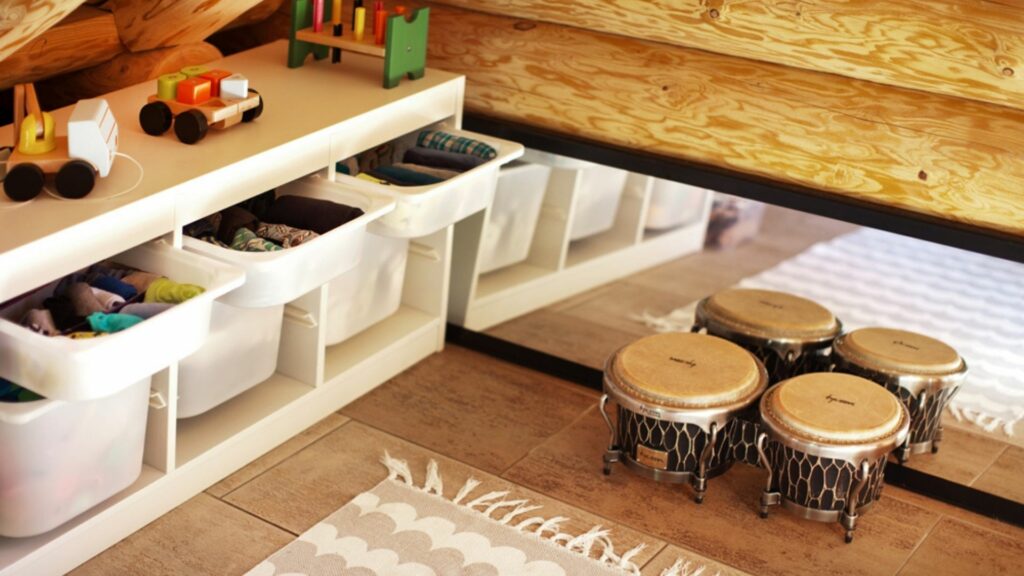
Children engage in deeper, more creative play when their environment isn’t overcrowded with toys. A playroom that avoids feeling like a disorganized warehouse has an immediate calming effect on their nervous system. Regularly revisit toys to release anything damaged, broken, or outgrown. I also routinely clear out random promotional trinkets, cards, and plastic favors accumulated from doctor visits, restaurants, or gift bags. You can also implement toy rotation: store half of their toys away for two to four weeks, then swap them out. Bringing out the rotated set feels like receiving brand-new treasures every time. My son is thrilled every single time we do this!
When it comes to children’s artwork, frame and display the pieces that stand out most, and take high-resolution keepsake photos of sentimental items that are too bulky to store indefinitely.
What KonMari Delivers to the Whole Family
You reclaim immense amounts of time previously lost to searching for missing items because everyone gains a clear overview of where things live. Getting out the door in the morning becomes smooth and effortless. How? Establish distinct zones for children’s things. Prevent toys from silently taking over every shared room. Children absorb their environment intuitively; when the home reflects clarity and order, they register that as their baseline and mirror it in their own bedrooms. Remember, though: never force family members to purge or organize. Lead entirely through quiet inspiration. It works like magic—whenever I sort a closet, my husband naturally starts organizing another corner of the house on his own. Furthermore, acknowledge that specific chapters of life (like adolescence) come with healthy domestic messiness as an essential developmental phase. Respect that rhythm!
The KonMari Method™ with Children in a Nutshell:
- Begin sorting toys, books, and clothing with children around age three. Start positively by asking for their top three favorite items.
- Guide toddlers (starting around twelve months) to return objects to their dedicated “homes.”
- Narrate what you are doing while organizing—keep the tone lighthearted so it feels like playful collaboration rather than a chore.
- Teach children to respectfully thank and release outgrown or damaged items.
- Implement a predictable toy rotation to keep play engaging and spaces uncluttered.
- Establish clearly designated zones for children’s belongings and consistently return items there.
It Is Worth It—Honor the Time It Takes
Decluttering the KonMari way takes focused time, but it is an investment that repays you tenfold in everyday ease. As a foundational rule: reducing the overall volume of possessions in your living space dramatically increases your ability to sustain natural order. Once the primary sorting phase is complete, assign every possession an intuitive home and return it there after use. Living with children means your home is in constant motion; demanding perpetual museum-level perfection is a recipe for burnout. Keep your expectations rooted in real life!
To close, I love these grounded words from Marie Kondo:
“Motherhood has taught me to be more forgiving toward myself. The joy that comes from parenting outweighs the satisfaction of a perfectly tidy home.”
Marie Kondo
I hope this guide gives you practical encouragement and renewed motivation to begin. If you would love personalized, gentle support as you transform your space, you can book an Online consultation Healing Tidying™ directly with me.