

During the covid pandemic, people spent much more time at home than they were used to. Often the whole family was at home — with older and newly also younger children. It was a very challenging period for all of us. We could see it as a burden, or turn it into an opportunity for personal growth. Spring energy encourages making changes so we can regain strength. Do you know the Japanese KonMari method? Have you seen the Netflix series Tidying Up with Marie Kondo or read the book The Life-Changing Magic of Tidying Up? This Japanese approach to tidying and organizing the home is exactly what I’d like to inspire you with. Here are tips on how to declutter with children.
Marie Kondo created a highly effective tidying and organizing method that truly works. Do you know how much stress, searching, and unnecessary chaos you can avoid? It can completely transform the atmosphere in your home. Improve relationships with your partner and children. A calm mother creates a completely different energy at home. When a woman feels good, the whole family benefits. You’ll also have more time for what truly matters — playing with your kids or enjoying your hobbies. Add whatever is most important to you.
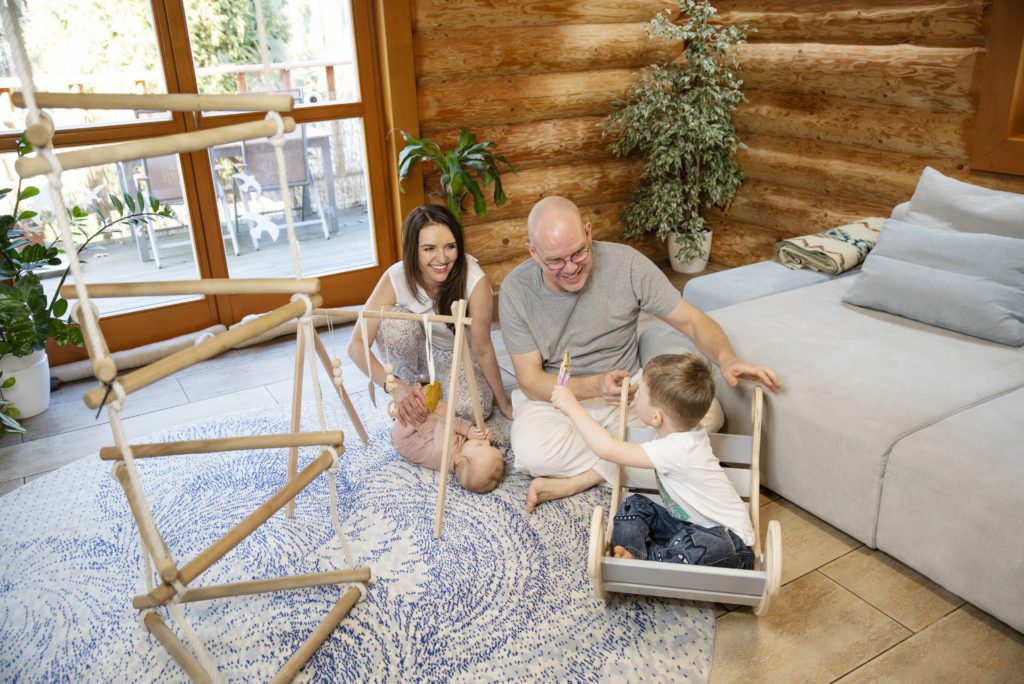
What I describe above is not just theory. I decluttered our entire home using KonMari not once, but twice! And I also work with clients so they too can finally enjoy more order and peace at home. Want to learn more? Let’s dive in — here are practical tips on how to follow the KonMari method.
KonMari Method Rules:
Rule No. 1 Commit to Tidying
Once you feel the inner impulse that it’s truly time to change something in your life, make the most of it. The stronger the commitment, the greater the chance of success. Marie Kondo recommends doing a big, intense, one-time declutter. It’s motivating to see results quickly. I personally arranged 3–4 hours of childcare once a week. In 2.5 months, I finished decluttering the entire house and garden.
And an important addition: commit to the process. Plan how much time you’ll invest. Tell your family and friends. Take practical steps — arrange childcare in advance. You need peace for sorting, so if you can’t arrange outside help, ask your partner to take the kids out.
Rule No. 2 Work with Your Vision of an Ideal Life
Even though parents of small children have little time for anything, don’t skip this step. Write down a few points:
What would your ideal home look like?
Your ideal lifestyle?
Your ideal wardrobe?
Your ideal day and hobbies?
Be very specific. This is a powerful tool that helps you remember your goal when you feel exhausted and forget why you started.
Rule No. 3 Finish Decluttering First, Organizing Comes Later
Resist the temptation to buy beautiful storage boxes. Wait. Don’t buy anything new during the big declutter. Use what you already have — even shoe boxes. In the first phase, don’t bring anything new into the home. Don’t worry, once everything is sorted, you’ll be able to fine‑tune it to your liking.
Rule No. 4 Sort by Category, Not by Room
This rule is the reason for KonMari’s worldwide success. Gather all items of the same category into one pile and sort them there. Tidying by room is less effective. If you want real results, trust this process. It’s often outside the comfort zone — but that’s where personal growth happens. Remember: you only sort your own things and those of children under three.
Rule No. 5 Sort in the Exact Order of Categories
Clothes – Books – Papers – Komono (miscellaneous items) – Sentimental items
Why this order? We start with items with low emotional value and work our way toward the most meaningful ones. Marie Kondo observed this through years of practice. With younger children, we sort toys and books. Clothing can be offered Montessori‑style — letting them choose from a few pieces. With older children, we sort all their belongings.
Rule No. 6 Ask Whether the Item Sparks Joy
If you feel you don’t have time for this, you may be overthinking it. It’s simply about taking each item in your hands and noticing how you feel. Intuition rarely lies. The first feeling is usually the right one.
From the pile, take each item and decide whether to keep it based on whether it sparks joy (you like it, it fits your life, it feels good). Then create three piles: “Keep”, “Let go”, and “Not sure”.
KonMari and Children
Marie Kondo observed with her own children that kids older than three can sort their belongings and answer whether an item brings them joy. Start positively — ask the child to show you their three favorite toys or books.

We also teach children to consciously say goodbye to items. Thank the toy or book before letting it go. Explain that some children have few or no toys — and ask which one or two they would give them. Sorted and functional toys can be gifted to friends with younger kids, donated to charity, shelters, or taken to SWAP events.
Less Is More
Children play better when they have fewer toys. It’s calming and harmonious when the room isn’t a chaotic storage space. Regularly declutter toys and let go of broken or non‑functional ones. I also regularly throw away all cards, pictures, and figurines we get at doctors, restaurants, or as rewards. You can also try toy rotation — hide some toys for 14 days and then swap them. Children feel like they have brand‑new toys every time you bring out the hidden ones. My son is always thrilled!
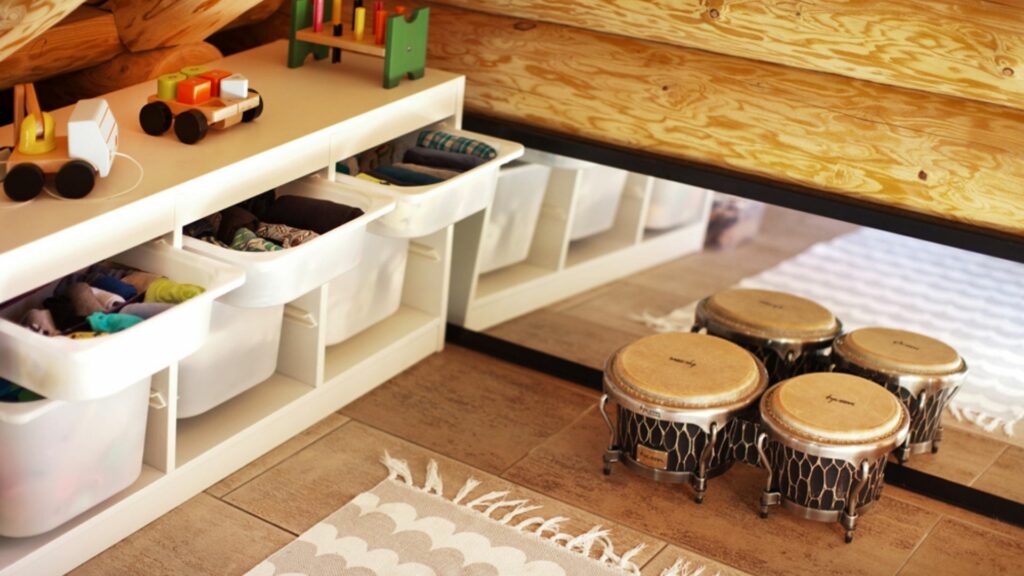
As for children’s artwork, display the best pieces and photograph the sentimental ones you find hard to let go of.
What KonMari Brings to the Whole Family
You save a lot of time searching for things because you gain a clear overview of where everything is. Leaving the house becomes easier. How? Define zones for children’s items. Don’t let toys occupy the entire home. Children absorb the environment — when the home is tidy, they take it as the norm and it transfers to their rooms. But remember: never force anyone to declutter. Inspire through your own actions. It’s magical — when I declutter something, my husband often joins in elsewhere. And some life phases (like adolescence) naturally come with chaos — respect that.
KonMari with Children in a Nutshell:
- We can start sorting toys, books, and clothes with children from age three. Begin positively — ask them to show their three favorite items.
- Younger children (even from one year old) learn to return things to their “homes”.
- Explain what you’re doing while tidying — make it playful and positive.
- Teach children to respectfully say goodbye to broken or decluttered items and thank them.
- Rotate toys regularly — hide some and swap them later.
- Have clearly defined zones for children’s items and return things there.
It’s Worth It — Give It Time
I won’t lie — decluttering the KonMari way takes time, but it’s an investment that pays off many times over. Generally, when you reduce the number of items in the home, the possibility of order increases. After finishing the big declutter, give every item a home and return it there after use. With children, everything is constantly in motion — expecting a perfectly tidy home at all times is unrealistic. Be realistic!
To conclude, I’d like to share Marie Kondo’s words:
“Motherhood has taught me to be more forgiving toward myself. The joy that comes from parenting outweighs the satisfaction of a perfectly tidy home.” I hope this text encourages and motivates you to begin.
Marie Kondo
I hope this text supports and motivates you to get started. And if you need help, feel free to reach out — we can arrange a consultation.