
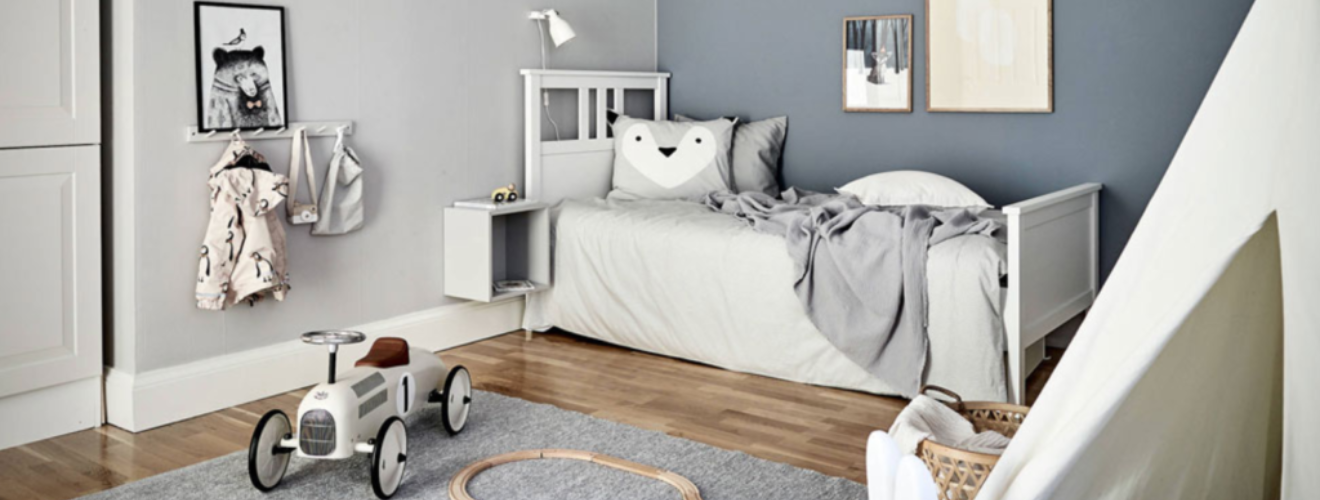
You know how it is — you scroll through Pinterest or Instagram, admiring beautiful interiors and perfectly tidy kids’ rooms, dreaming that something similar could exist in your own home. You drift into that dream… Then you stand up, trip over Lego bricks, push aside scattered clothes and toys to make a path through the living room into the kitchen, and think: “Well, sure… they just staged it for photos. It can’t look like that normally.”
The truth is — it can, and it can’t. Speaking for our home: after decluttering the entire house using the KonMari method, someone can come over almost anytime without us needing to do any major cleaning. The advantage of a home with fewer things and a good storage system is that you can tidy it up in just a few minutes. And trust me — our kids make a huge mess too! My tactic is simple: whenever I walk through the house and see something out of place, I put it back. So my little son and I “play” this game all day long.
Marie Kondo guarantees “tidying once and for all” in her book *The Life-Changing Magic of Tidying Up*. You might think: “Sure, but that’s for people without kids — they have time to do it deeply.” The great news is that KonMari is actually a lifesaver for households with children — it helps eliminate chaos, stress, and constant searching for things.
Generally speaking, when you reduce the number of items in your home, the possibility of order automatically increases. After finishing the big declutter, every item gets a home — and goes back there after use. Yes, with kids it’s not that simple, but they can learn this from a very young age. (We try this with our 2.5‑year‑old — often unsuccessfully, but we try…)
Spark joy check
Marie Kondo wrote her first bestseller while living alone in a tiny Tokyo apartment. Because many readers had questions, she later wrote *Spark Joy*, an illustrated encyclopedia explaining KonMari in detail. Based on her experience with her own children, she observed that kids older than 3 can begin practicing the Spark joy check — sorting their things and asking whether an item brings them joy. Don’t expect children to let go of things easily!
Marie recommends starting sorting with children older than three. Her guidance is general: teach kids from a young age to return things to their “homes,” have clearly defined zones for their belongings, explain what you’re doing, and involve them in tidying. This aligns with Montessori principles.
As for actual decluttering — I believe it’s not fully possible with children around age three. (It definitely wasn’t with mine!) My experience with my 3‑ and 6‑year‑olds is that they cannot let go of things yet — which is completely natural. Their development is focused on the present moment and their own interests. A three‑year‑old cannot grasp the concept of “You haven’t played with this toy for a long time, let’s give it away.” They see the toy and immediately think: “Wow, I love this! I want it!” And if you mention giving it away, it becomes even more important. It’s like someone going through your wardrobe and telling you to give away clothes you haven’t worn — you’d suddenly find reasons to keep them. Children simply cannot understand donation or organization yet — they perceive everything through their own needs. And that’s okay — their ego is forming. So what now?
It’s good for children to grow up in an environment where regular decluttering is normal. Mom does it, dad does it, so we do it with toys too. They naturally see that maintenance is part of home life. Start by letting them choose which clothes, toys, or books they like most. That’s enough at first.
With younger children, regularly clean out toys and random little objects they bring home. Stones, sticks, tiny figurines, stickers, strings, papers… They fill pockets, backpacks, and secret hiding spots. My son is a master of this. He forgets what he collected. These things are part of his fantasy world for a moment — then he loses interest. I collect them into a small box on a shelf. When it’s full, I throw most of it away. Kinder egg toys can be donated to doctor’s offices or waiting rooms. You can wash them in the dishwasher — unless they’re wooden or hand‑painted.
Only with children older than 5 can we begin explaining. If you want new toys, some old ones must go. There’s no space. My son accepted this — motivated by the idea of a new toy, he agreed to let go of one or two. This was a years‑long process — I tried from age three, often unsuccessfully, feeling like something was wrong with him or me. Until I realized children simply cannot declutter at age three! And even if your child is older than five and not used to tidying toys, start only with reorganizing and removing broken items. Don’t rush it. If a child feels pressure, they won’t let go of anything. We want them to accept that new toys require space.
With older children who are used to this process, you can introduce the idea that toys could help other kids — especially toys they’ve outgrown. You can take them to charity or a SWAP event, where they can even choose something in return.
The key is involving children in the process. Even during whole‑home decluttering — they don’t need to actively sort, but they can be present and hear short explanations: “I’m letting go of these things because we don’t use them anymore… because we have duplicates… because we got new ones…” Let them see that clutter doesn’t accumulate endlessly. Parents often say: “My child doesn’t want to give anything away!” That’s normal. But how about you? Have you decluttered your own things? That’s where you must start — lead by example.
With KonMari, we can gradually teach children to consciously say goodbye to things. Older kids can understand that some children have few or no toys — and choose one or two to donate. Sorted toys can be given to friends with younger kids, charities, shelters, or SWAP events.
There are SWAP events focused specifically on toys and children’s clothes. It’s a great way to get items without spending money. Personally, I’m not a fan of reselling children’s items — the price you get is so low compared to the time spent photographing, posting, answering questions, and shipping. Time is a more valuable commodity.

In a household, less is more
Children play better when they have fewer toys. It’s calming and harmonious when the room isn’t a chaotic storage space. Regularly declutter toys and let go of broken or non‑functional ones. I also uncompromisingly throw away all cards, pictures, and figurines we get at doctors, restaurants, or as rewards. Try toy rotation — hide some toys for 14 days and then swap them. Children feel like they have brand‑new toys every time. My son loves it!
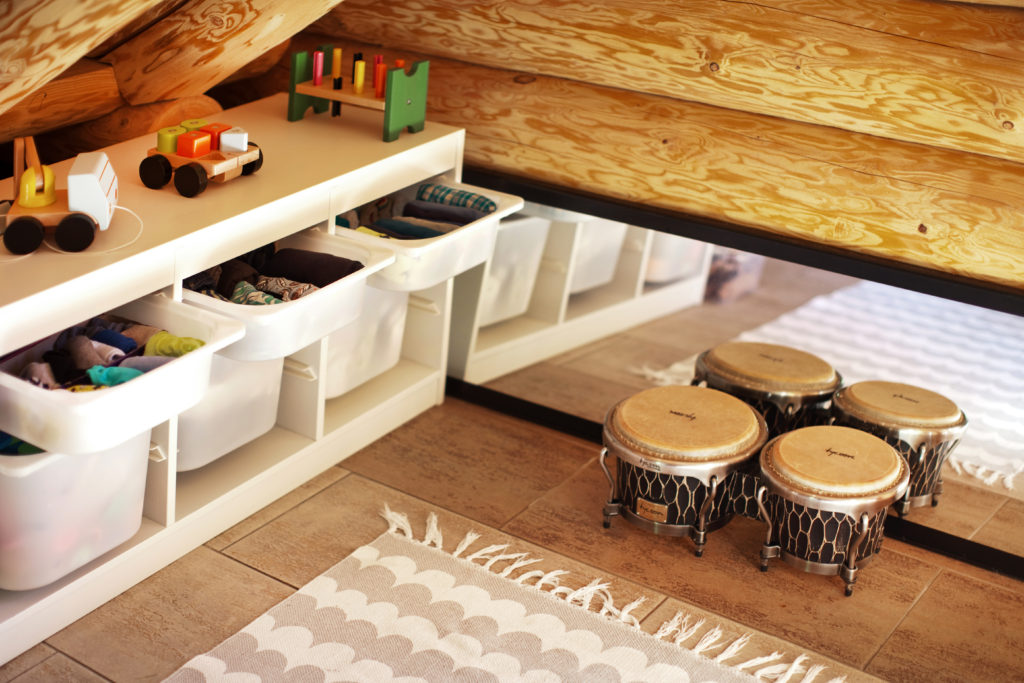
What does KonMari bring to the whole family?
KonMari saves lots of time searching for things — you gain a clear overview. You don’t need to run around frantically cleaning before every visit.
Children absorb everything — when the whole home is tidy, they take it as normal and bring that into their rooms. But remember: never force anyone to declutter. Inspire through your actions. Whenever I declutter something, my husband usually joins in elsewhere. And some life phases — like adolescence — naturally come with chaos. Respect that.

KonMari with children in a nutshell:
- We can start sorting with children from age 3 (toys, books, clothes). Start positively — ask them to show their three favorite items.
- Children older than one learn to return things to their “homes.”
- Explain what you’re doing while tidying — make it playful and positive.
- Teach children to respectfully say goodbye to broken or decluttered toys (KonMari style: thank the item).
- Rotate toys regularly — hide some and swap them later.