
Cleaning the home according to Marie Kondo became famous mainly thanks to sorting and folding items into the well‑known vertical rolls and placing them into boxes. However, the true essence of the method lies in sorting in a precise order by categories — this is what makes the KonMari method different from other home‑tidying techniques. The Sorting Map helps you navigate this process.
What’s the point? A huge one! By tidying category by category — not room by room — you avoid simply rearranging things, skipping items, or moving clutter from one room to another. You also clearly see how many items you actually own in each category. It takes some effort to remember and find where all items of the same category are stored, but it’s absolutely worth it.
Komono – the small things we struggle to let go of
Let me explain with scissors. It’s very different to gather all scissors you own in one place versus having several pairs hidden around the home. If you tidy room by room on different days, you likely won’t notice how many you have. A typical scenario: you own plenty of scissors — one pair in the kitchen, one in the office, one near sewing supplies, and others who‑knows‑where — and when you need a pair, you can’t find any. You know that feeling, right?
So in the KonMari method, you gather all scissors from the entire home, choose the pair you love most — the ones that cut best, feel good, spark joy — and respectfully let go of the rest. You follow this process with every single item in your home.
KonMari category order
- Clothing
- Books
- Papers
- Komono
- Sentimental items
Why this order? Marie Kondo discovered through years of practice that this sequence works best — tidying flows more smoothly and makes sense. It worked incredibly well in my own home too. You start with clothing, move through books and papers, and then reach the vast category called “komono.” What is komono? It’s a Japanese term often translated as “small items, miscellaneous things, accessories, gadgets, small tools.” It includes everything in your home that doesn’t belong to the previous categories — CDs, DVDs, electronics, cosmetics, and more.
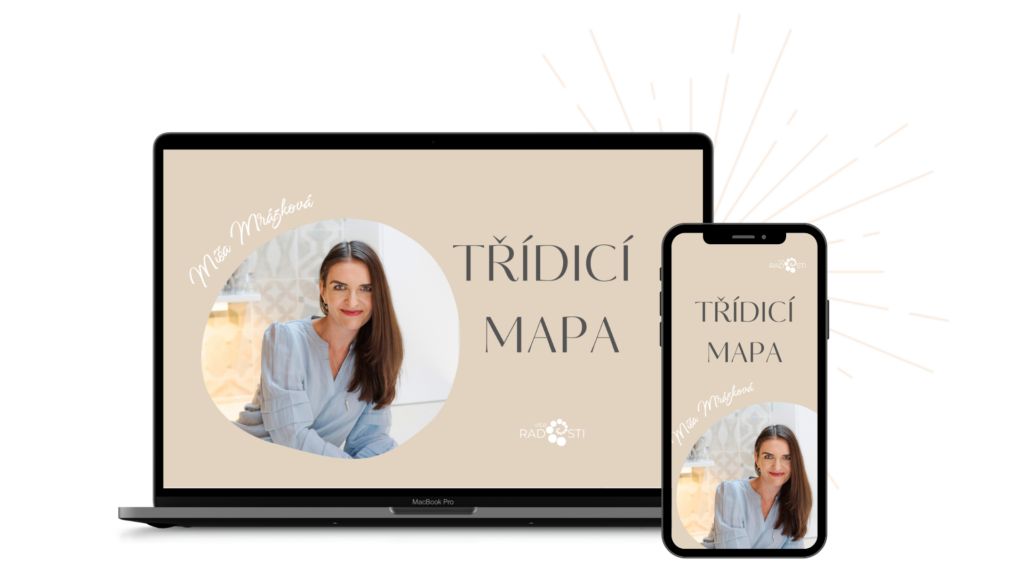
For my clients, I’ve created a detailed Sorting Map with all categories and subcategories — we go item by item. It’s a great feeling to have a clear guide and know exactly what’s next. This prevents getting lost in piles of things or accidentally skipping something. Everyone owns different amounts of items and is attached to different things — the map helps keep clarity.

Once you successfully work through the largest category