In 21st‑century society, natural reactions to periods of excess and overwhelm have begun to emerge, and authors from different cultures are looking for ways to cope with this era of abundance. Countless books and articles with minimalist inspiration are being published. Yet the concept of minimalism varies greatly depending on who presents it and where it comes from. It’s no surprise, then, that there is no single definition of the term. How would I define it?
“Minimalism is a lifestyle in which we choose less in order to gain more time and space for what truly matters.”
Minimalist bestsellers
Minimalism is certainly not a trendy novelty of this century. The tendency toward simplification has repeatedly appeared throughout various historical periods. It is a natural societal response to abundance and has existed since antiquity. In modern times, British author Karen Kingston significantly contributed to the popularization of letting go of possessions. Although she is not commonly listed among minimalist authors, her book Clear Your Clutter with Feng Shui is one of the first works addressing decluttering with an energetic dimension. It was published back in 1994. Kingston is truly a global pioneer of this topic.
The biggest global bestseller became Marie Kondo’s book The Life‑Changing Magic of Tidying Up, published twenty years later. It sparked an enormous wave of decluttering across the world. Interestingly, the author herself distances her KonMari method from minimalism. Her approach emphasizes joy from items. I believe this is one reason why she became so popular. The idea that you can keep what you love and choose only your favorite things feels more like an opportunity than a restriction. Yet the smiling Japanese author will still convince you that you can keep everything you want and focus on joy — and the main tool will still be reducing the number of items, in a precisely defined order! The global influence and contribution of Marie Kondo in the field of tidying and decluttering is undeniable. However, her approach may not suit everyone, as it is extreme in many ways.
Japanese minimalism versus American
Japanese minimalism can be far more extreme than, for example, American minimalism. Fumio Sasaki, author of Goodbye, Things, enthusiastically advocates using one small towel in both the bathroom and kitchen, and his tiny one‑room apartment contains almost nothing. In contrast, American author Joshua Becker, whose approach to minimalism is gentle rather than extreme, admits in his book The More of Less that his family reduced the number of televisions from four to one. Do you feel the cultural difference?
That’s why the continuation of this article will explore Japanese, American, and even Scandinavian minimalism. For now, it’s important to realize how much it matters where minimalist inspiration and guidance come from.
Put yourself and your feelings first
My recommendations:
- Take minimalist tips and inspiration with healthy skepticism
- Be cautious whenever someone promises miraculous, universally effective methods
- Remember where you come from and don’t force yourself into something that doesn’t suit you
On my personal journey, I realized that universal instructions suitable for everyone don’t work for me. I used to work too dogmatically with the Japanese KonMari method, and through that I understood that applying the same template to every household doesn’t make sense. Every person and every home is so different! That’s why, within Healing Clean‑Up, I encourage people to always put themselves and their feelings first. I also encourage them to consider how much life energy they have and where they currently are. A busy mother of small children or a senior with health issues needs a different decluttering approach than a young woman living alone.
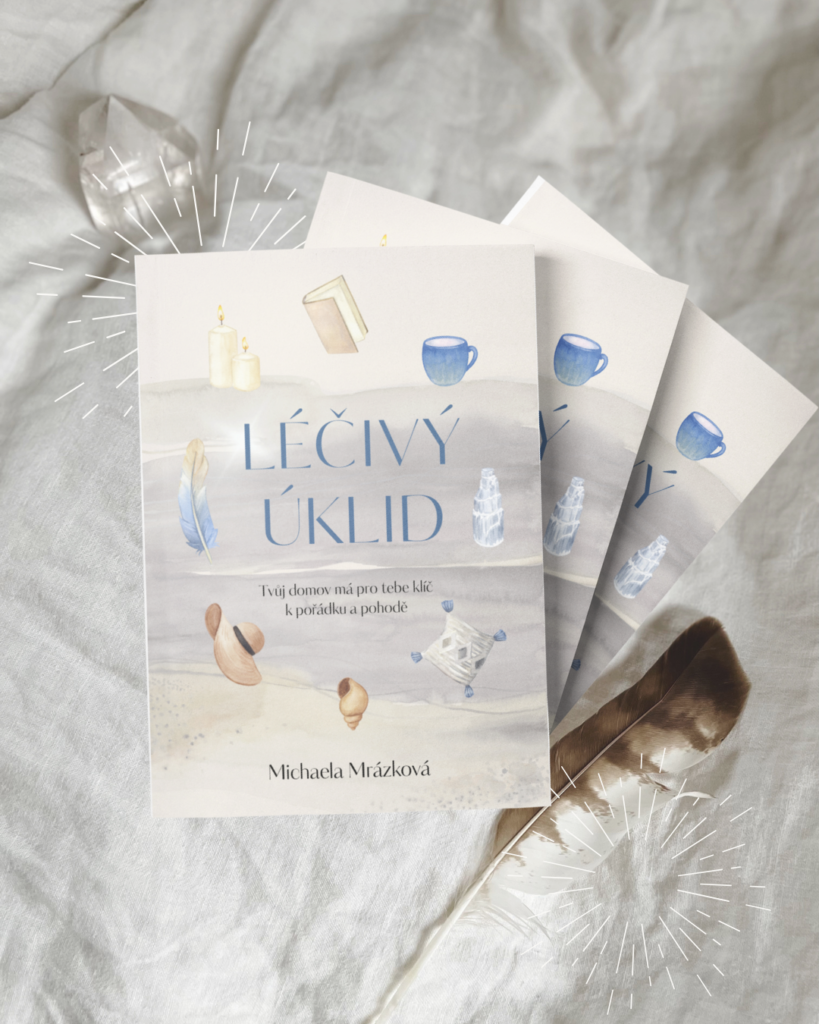
My goal is to offer different options for letting go of things that also reflect the environment we come from. You can learn more about this Czech approach in my Healing Clean‑Up book.
Which minimalist books have inspired you? Let me know in the comments.